Willa Hansen · 14 November 2026
Seasonal Plankton Migration Cycles Shaping Adaptive Lighting Placements for Coastal Relaxation Zones
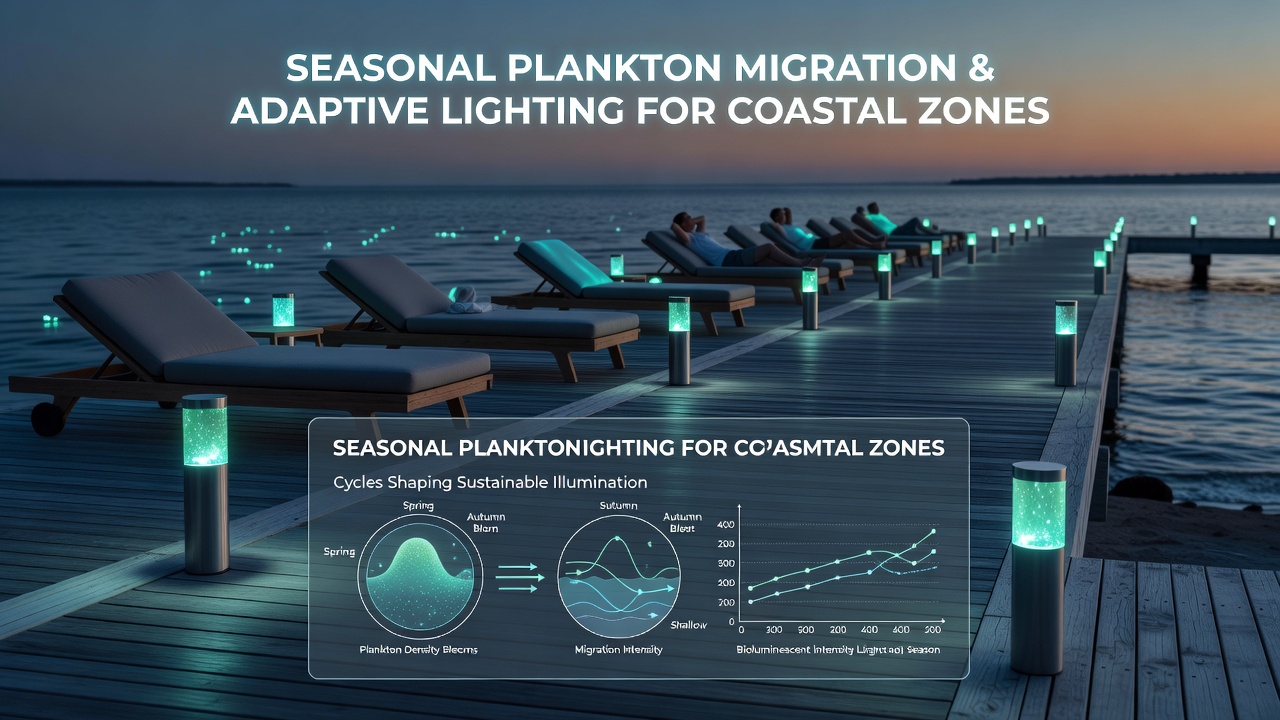
Seasonal plankton migration cycles influence how designers position adaptive lighting systems in coastal relaxation zones, and data from marine monitoring programs show that these microscopic organisms move vertically and horizontally in response to temperature shifts, nutrient availability, and light levels throughout the year. Researchers track these patterns using buoy arrays and satellite imagery, revealing that spring blooms often concentrate near surface waters while autumn descents send populations deeper, altering the spectral conditions that fixed or movable lights must accommodate. In November 2026, updated reports from multiple oceanographic networks documented earlier-than-average vertical migrations in several temperate zones, prompting adjustments to sensor thresholds that trigger dimming or redirection of fixtures.
Tracking Migration Patterns Through Established Methods
Marine ecologists rely on acoustic Doppler current profilers and plankton nets to map daily and seasonal displacements, and findings indicate that many species ascend at dusk to feed while descending before dawn to avoid predation. These movements create predictable windows when surface illumination from nearby relaxation areas can intersect with high-density layers, so placement strategies now incorporate timed offsets that reduce overlap. Observers note that wind-driven surface currents further displace patches along shorelines, requiring lighting arrays to feature modular mounts that allow repositioning without permanent infrastructure changes. Data collected over multiple years demonstrate that zones with consistent upwelling show more stable migration corridors, whereas sheltered bays experience greater lateral drift during storm seasons.
Lighting Design Adaptations for Coastal Sites
Adaptive systems use photocells and motion detectors calibrated to plankton density forecasts, and installations along recreational waterfronts position fixtures at varying heights and angles to minimize downward spill during peak ascent periods. Engineers integrate these controls with local tide and temperature sensors, producing schedules that shift automatically as seasonal cycles progress. One study of Mediterranean shorelines found that elevating primary light sources above typical surface bloom depths reduced measurable interference with vertical migration by measurable margins, while secondary pathway lights remained at lower wattages to preserve visitor safety. Coastal planners coordinate with regional ocean data centers to receive weekly migration bulletins that inform maintenance crews when to recalibrate beam spreads or swap filters for warmer spectra less attractive to phototactic species.
Integration With Existing Coastal Infrastructure
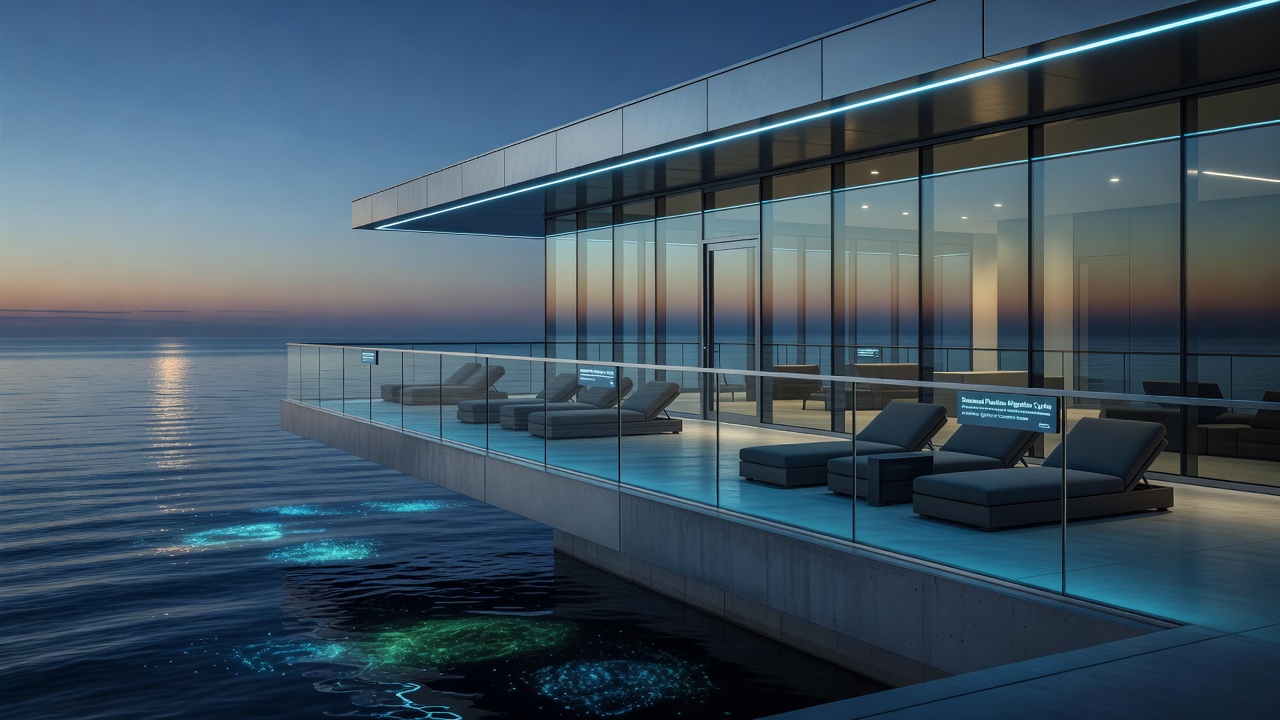
Existing deck and seating layouts often determine where new lighting conduits can run without disturbing drainage or load-bearing elements, and migration data now guides decisions about conduit depth and fixture spacing. In areas where autumn plankton layers linger near the thermocline, designers favor horizontal rather than vertical beam patterns that keep light above the water column during critical descent phases. Collaboration between lighting technicians and marine biologists has produced standardized checklists that include seasonal verification of sensor calibration against published migration charts from sources such as NOAA coastal monitoring updates. These protocols also account for bi-annual shifts in lunar illumination that can amplify or dampen natural light cues used by migrating populations.
Regional Variations and Monitoring Networks
Temperate and subtropical coasts exhibit distinct timing in plankton movements, with Pacific Northwest records showing earlier spring ascents compared to Atlantic counterparts due to differences in freshwater inflow. Australian research stations have contributed long-term datasets that highlight how El Niño events alter migration depth, and European monitoring programs supply complementary information on species composition changes. Planners reference these combined resources when siting relaxation zones so that lighting placements align with documented corridors rather than assuming uniform conditions across latitudes. Sensor networks deployed since 2023 now feed real-time density readings into municipal lighting management platforms, allowing remote adjustments that respond to sudden patch movements caused by localized eddies.
Conclusion
Seasonal plankton migration cycles continue to inform the placement and operation of adaptive lighting in coastal relaxation zones through ongoing data integration and modular design approaches. Monitoring networks supply the necessary forecasts that enable precise positioning of fixtures, while regional variations underscore the need for site-specific calibration rather than standardized templates. As additional datasets accumulate from international observation programs, lighting strategies evolve to maintain functional illumination while respecting the vertical and horizontal movements that define plankton ecology throughout the annual cycle.